SEO is changing: What AIO and AEO mean for your website
Search is changing. And if your website was built only to rank on Google, it may be time to think beyond traditional SEO.
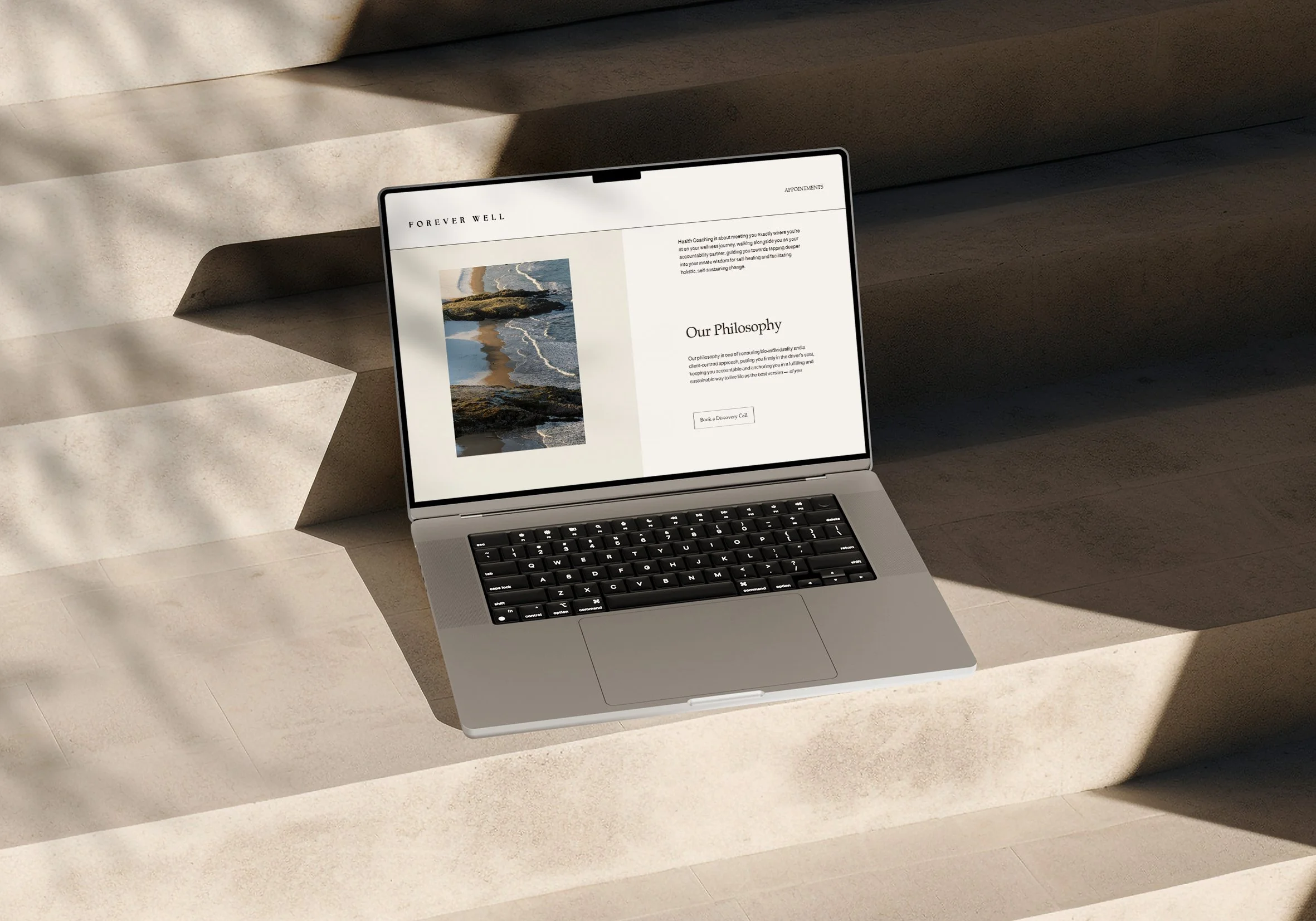
We recently attended a HubSpot seminar exploring the evolution of search and the growing importance of Answer Engine Optimisation (AEO) and AI Optimisation (AIO). Essentially, how businesses can structure their digital presence so they can be found, understood and referenced by AI-powered search tools.
For us, this reinforced something we already believe when building websites for our clients: a good website isn't just designed to look good. It needs to communicate clearly with people and machines.
Google is no longer the only place people go when they have a question. Increasingly, they're asking ChatGPT, Perplexity, Gemini, Copilot and other AI-powered platforms to research businesses, compare services, make recommendations and answer questions.
SO, WHAT DOES THIS MEAN?
“The way we approach web content, structure and strategy needs to evolve.”
What is AEO?
Answer Engine Optimisation (AEO) is the practice of structuring your website and content so that answer engines can easily understand, extract and use your information when responding to a user's question.
Traditional SEO has largely focused on helping your website appear in search results. AEO takes this one step further.
What is AIO?
AI Optimisation (AIO) is the broader practice of making your brand and digital content easier for AI systems to understand, interpret and potentially reference.
Rather than thinking solely about keywords and rankings, AIO considers the overall information ecosystem surrounding your business.
That includes:
Your website copy
Page structure and headings
FAQs
Service descriptions
Blog content
Images and their supporting information
Business information
Internal linking
Structured data
Consistent brand information across the web
Freshness and accuracy of your content
The goal isn't to "hack" AI into mentioning your business. It's to make your business clear, credible, relevant and retrievable.
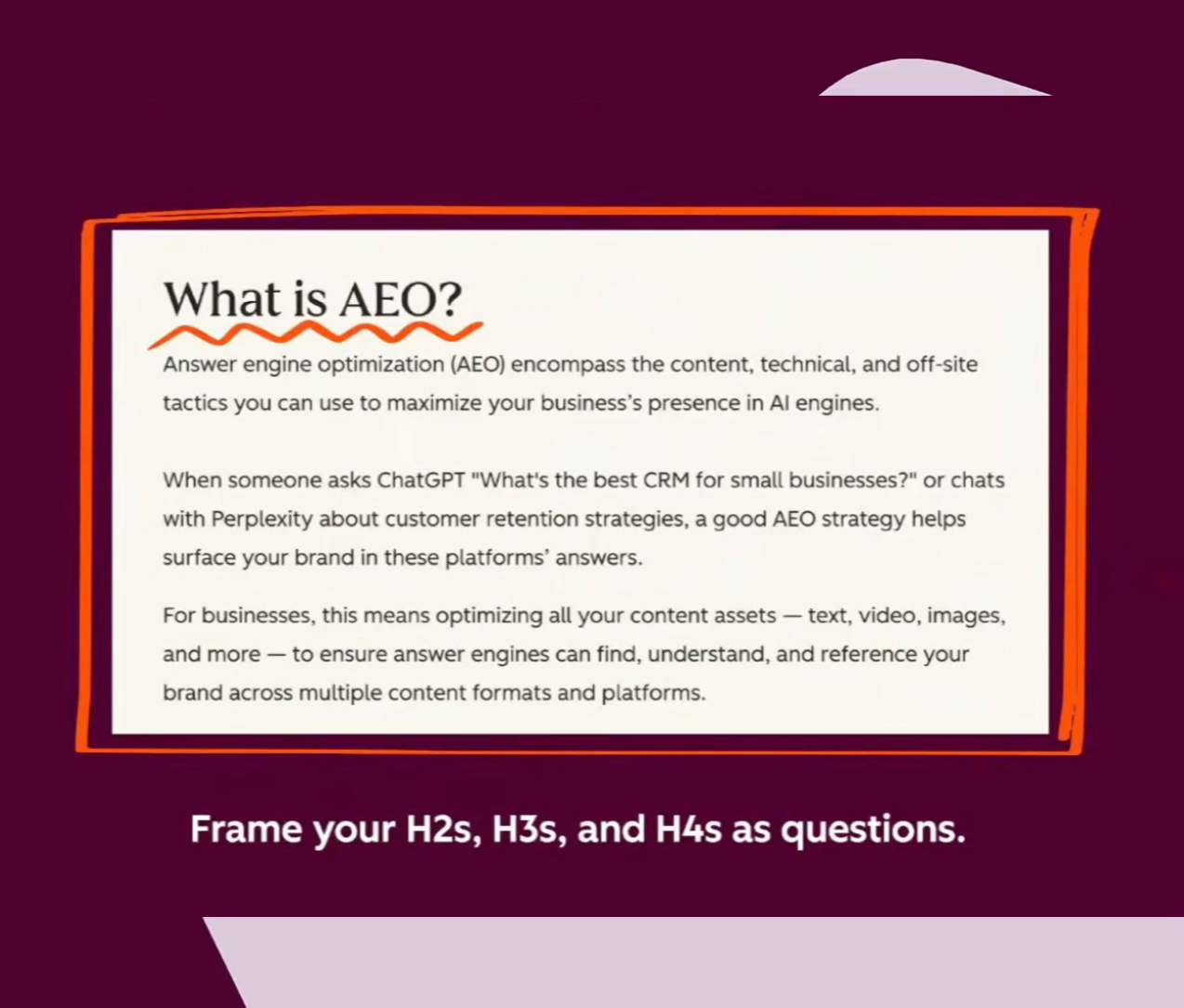
According to Hubspot, AEO means optimising assets and content on your website to be discoverable by AI.
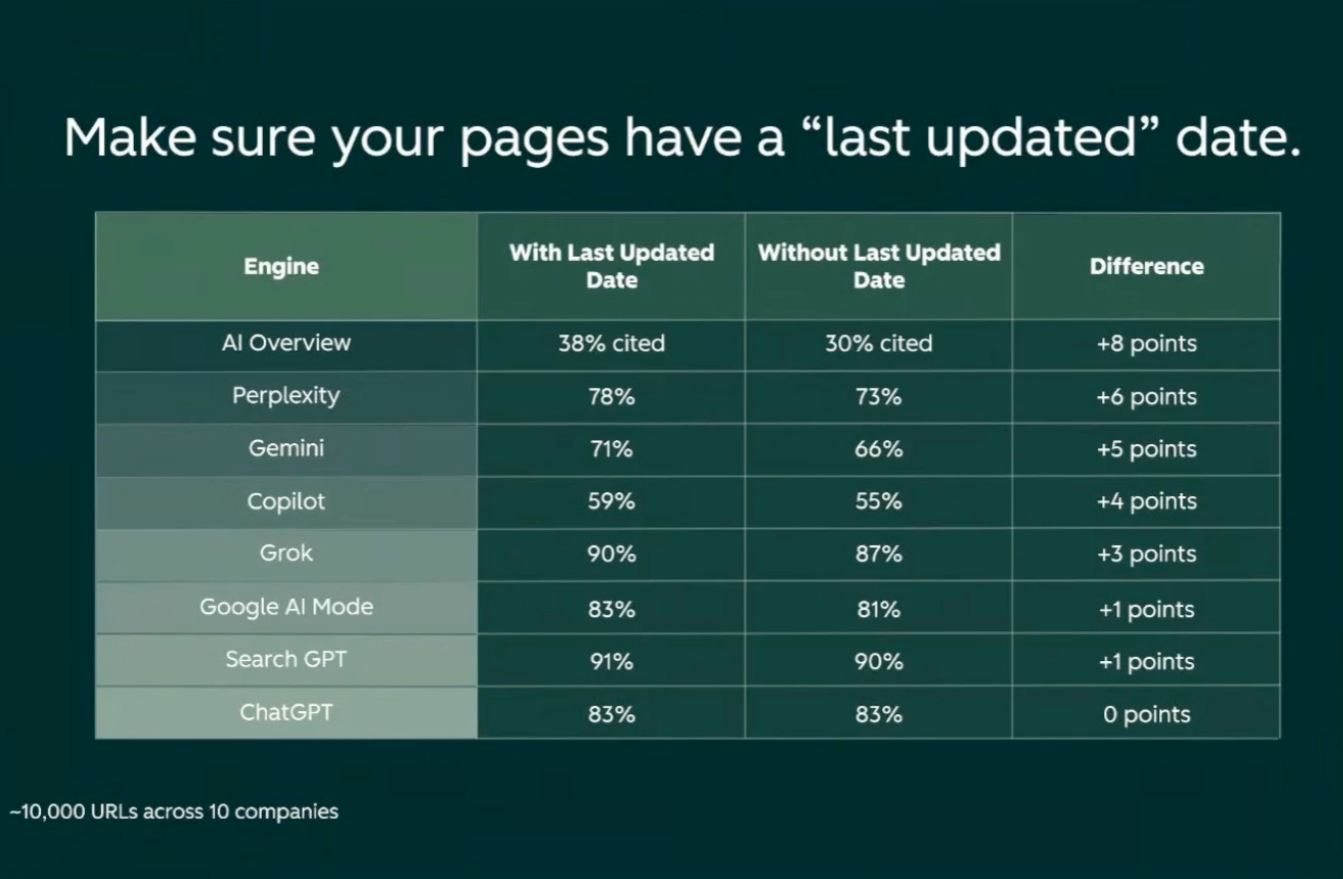
By frequently updating your web pages, your website remains top of mind and consistently refreshed in AI searches.
How do we build AEO into our clients' websites?
At MONOCROW, AEO isn't something we treat as an afterthought. It can be considered from the beginning of the website strategy, alongside the brand, user experience and traditional SEO.
1. We structure pages around questions and intent
One of the key takeaways from the seminar was the importance of thinking about questions rather than just keywords. Instead of creating a page because a keyword has a certain search volume, we consider:
What is someone actually trying to find out?
This influences the way we structure headings, subheadings and content. For example, instead of a generic heading such as:
“Our Services” - We might structure the content around more specific questions:
What graphic design services do we provide?
Who can benefit from web design?
How does mobile web design work?
This creates content that is useful to humans while also giving search and answer engines clearer context.
2. We use FAQs strategically
An FAQ section shouldn't exist simply because every website seems to have one. It should answer the real questions your prospective customers are asking.
For example, a website for a local physiotherapy practice might answer:
What does a graphic designer do?
How do I know if I need a logo designer?
Do you provide graphic design for small businesses?
Which areas do you service?
What should I expect during a design project?
These questions provide valuable information for potential clients while creating clear, structured answers that can be understood by search and AI systems. Your FAQ isn't just another website section. It is an opportunity to answer the questions your audience is already asking.
3. We make your business information explicit
AI systems need context.
Simply saying:
"We create beautiful brands for modern businesses." doesn't tell a search engine very much.
A stronger website might explain:
"We are a residential graphic design studio based in Wollongong, specialising in unqiue brands and functional websites across the Illawarra and South Coast of NSW."
Now the business has a much clearer digital identity.
We know:
What: Graphic design
Where: Wollongong / Illawarra / South Coast NSW
Who: Small businesses
Speciality: Unique brands that successfully convert
Good website copy shouldn't make people — or search engines — work too hard to figure out what you actually do.
4. We think about local search
For many of our clients, where you operate is just as important as what you do. A business might not need to rank nationally. It might need to be found by someone searching:
"graphic designer Shellharbour"
"occupational therapist Wollongong"
"wedding photographer South Coast NSW"
"plumber Kiama"
That's why location information should be incorporated naturally throughout the website rather than simply adding a list of suburbs to the footer. We consider service areas, location-specific content, Google Business information and the way services are described on the site.
5. We make content easy to retrieve
One concept we found particularly interesting from the seminar was the idea of "retrievable" content. Essentially, information needs to be presented in a way that makes it easy for systems to locate and understand. This means avoiding pages where all the important information is buried inside vague marketing language.
Instead, we favour:
Clear headings
Concise answers
Descriptive page titles
Logical page structures
Specific service descriptions
Internal links between related content
Relevant FAQs
Descriptive image information
Clearly defined business information
This is good website practice regardless of whether someone is finding your business through Google, ChatGPT or a recommendation from a friend.
Want a website built with the future of search in mind?
At MONOCROW, we create strategic, custom websites that bring together brand, content, user experience, SEO and modern search considerations so your website isn't just another pretty page on the internet.